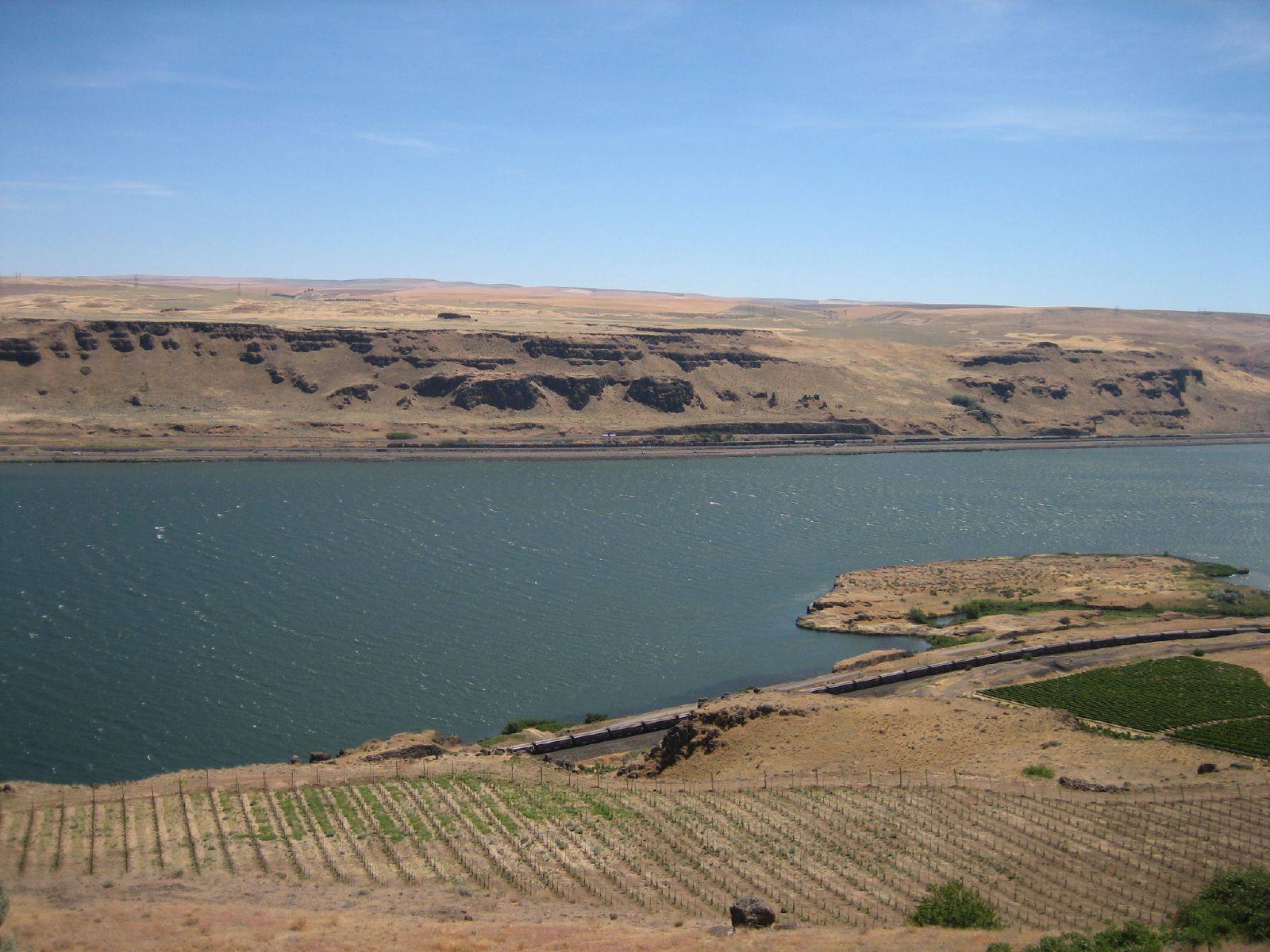
I've tried to lean toward an ideal, where the physical characteristics within the boundaries are uniform and have the potential, at least, to affect the sensory components of the resulting wine.
American wine's map kept redrawing itself in 2026. The Alcohol and Tobacco Tax and Trade Bureau finalized new American Viticultural Areas on both coasts, approved two more in the spring, and has additional proposals working through the pipeline, giving producers new tools to describe where their wines come from and giving the trade new names to learn.
Columbia Hills: Washington's 22nd AVA
The TTB finalized the Columbia Hills AVA in August 2026, making it Washington's 22nd wine appellation. The new region is a narrow, ribbon-like stretch of land along the Columbia River in Klickitat County, sitting between the Columbia Gorge AVA to the west and The Burn of Columbia Valley AVA to the east.
The petition was authored by Dr. Kevin Pogue, a geology professor at Whitman College, on behalf of Cascade Cliffs Vineyard and Winery. The region's story traces to the Missoula Floods, the cataclysmic Ice Age deluges that scoured the Pacific Northwest. The floods' high-water mark at 1,050 feet elevation forms the AVA's northern boundary; below that line, floodwaters stripped away topsoil, and a thin cover of windblown silt and sand called loess settled over basalt bedrock. The shallow, coarse soils force vine roots deep and drain quickly, restricting vine vigor and concentrating fruit.
Columbia Hills is small, at fewer than 30,000 total acres, with only 300 acres planted to vines and four wineries calling it home: Maryhill Winery, Cascade Cliffs, Jacob Williams Winery and Waving Tree Winery and Vineyards. Elevations run from 74 feet at the river to the 1,050-foot flood boundary, and the river itself warms early mornings and extends the ripening window.
Pogue, who has authored 11 AVA petitions, favors appellations where the physical characteristics within the boundaries are uniform. "I've tried to lean toward an ideal, where the physical characteristics within the boundaries are uniform and have the potential, at least, to affect the sensory components of the resulting wine," he told the Oregon Wine Press. Wineries using fruit from within the boundary may now apply for labels citing Columbia Hills AVA as the appellation of origin.
Nine Lakes and Nashoba Valley take effect
Earlier in the year, the TTB approved two AVAs on the same day. On March 24, 2026, the bureau approved the Nine Lakes of East Tennessee AVA and the Nashoba Valley AVA in Massachusetts; both came into force on April 23, 2026.
The Nine Lakes of East Tennessee AVA covers portions of 14 counties centered on Knoxville, surrounding the nine lakes formed by Tennessee Valley Authority dams along the Tennessee River. The AVA spans 4,064 square miles with 232 acres planted to vines, 32 commercial vineyards and 30 wineries, and grows vinifera, labrusca and hybrid varieties including Chardonnay, Norton, Catawba, Riesling, Cabernet Franc, Vidal and Chambourcin. Its distinguishing features are topography, elevation, soils and climate: the region sits entirely within the Valley and Ridge Province at 700 to 1,200 feet elevation, with a frost-free growing season averaging 213 days. Tennessee is now home to three AVAs. With the two April approvals, the total number of AVAs in the United States reached 279.
The Nashoba Valley AVA covers wine country in Worcester County, Massachusetts, giving New England producers another federally recognized appellation.
More proposals in the pipeline
Two more AVAs are working through the federal process. The TTB proposed the Champlain Valley of Vermont AVA in Notice No. 240, with the comment period closing May 26, 2026. The bureau's current regulatory agenda also lists the proposed establishment of the Rancho Santa Fe viticultural area in Southern California at the proposed-rule stage.
For producers, each new AVA is a labeling asset and a marketing story. For the industry at large, 2026's approvals continue the long trend toward smaller, more precisely drawn appellations, a shift that favors regions able to articulate exactly why their wines taste the way they do.