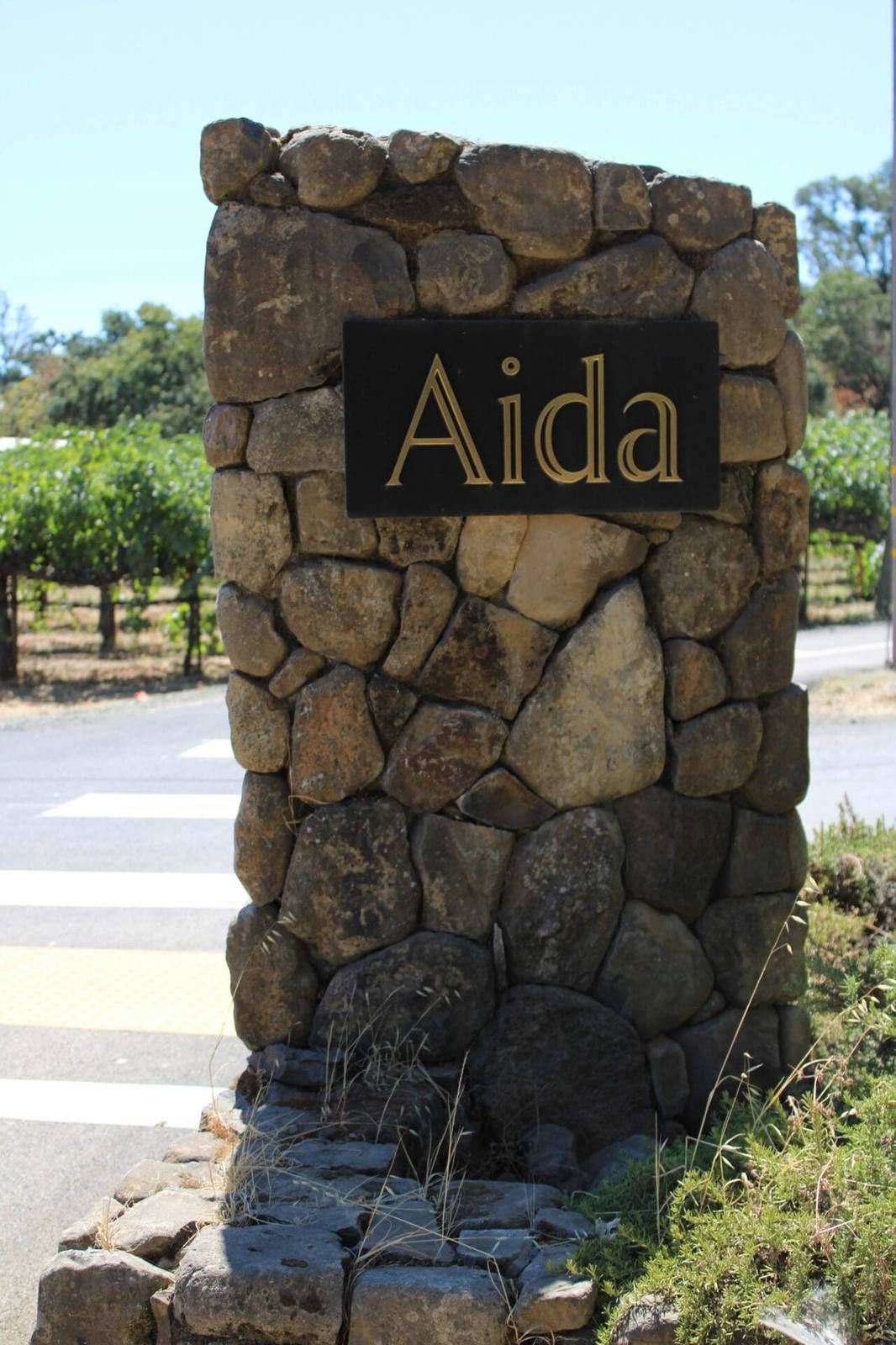
Passing the Aida Vineyard to Dustin, Renee and Joann ensures the property remains in the hands of people who understand and respect its history.
The Financial Times put Napa Valley's downturn on its magazine cover this month with a feature headlined "Napa Valley's hangover." Its standfirst, as published by the FT, reads: "People are drinking less. Vines are being ripped up. Winemakers are going bust. Can the Disneyland of wine survive the downturn?" For readers, that is a story about drinking less. For the trade, the same facts resolve into narrower questions. What is Napa vineyard land worth now? Who is still buying winery and vineyard assets, and on what terms? The transaction record of the past year answers both, and it is more orderly than the cover suggests.
An estate that sold in pieces
Start in St. Helena, where Vineyard 29 shows what "for sale" actually looks like in this market. In 2025, owners Chuck and Anne McMinn listed the estate whole. Wine Spectator reported an asking price of $65 million for a package that included the winery, a visitor center, 13,000 square feet of caves, three vineyards totaling 38 acres, an additional tasting room, two wine brands and their inventory, and a 2,700-square-foot residence.
The estate did not sell whole. It has sold in parcels, to neighbors. In May 2026, Arborum Napa Valley proprietors Caren and Nick Orum agreed to acquire a 24-acre portion of the property, including 7.4 acres of planted vineyard, in a transaction the parties expected to close in late July. The parcel, which the McMinns had bought in 2008 as part of the winery's expansion, sits adjacent to Arborum's Hidden Key Vineyard and expands the Orums' estate to 44 contiguous acres, about 10 of them under vine. "We're really excited about the opportunity to invest in our home and in the Napa Valley," Caren Orum told Wine Spectator. "We are firm believers in Napa's very long-term success. We're invested in Napa for the long haul."
On June 4, 2026, the second piece closed. Vineyard 29 sold its 17.82-acre Aida Vineyard in two parcels: the 10.5-acre west parcel to Dustin and Renee Mowe of MOWE Napa Valley, and the 7.32-acre east parcel to Joann Serafini, proprietor of Shibumi Knoll and an Aida neighbor since 2003. Financial terms were not disclosed. As a condition of the sale, Vineyard 29 secured grape purchase agreements from Aida for at least the next three years, keeping fruit for its Aida-designated wines while the land changes hands. The winery presented the sale as part of a long-term succession plan for founder Chuck McMinn, who is 74. "Passing the Aida Vineyard to Dustin, Renee and Joann ensures the property remains in the hands of people who understand and respect its history," McMinn said in the announcement. Wine Spectator reported that the Vineyard 29 winery facility and its remaining assets remain for sale.
The pattern matters more than the property. A marquee estate, listed at a peak-era price as a single package, cleared instead at parcel scale, to adjacent owners with a direct use for the ground, with the seller retaining the fruit supply it needs. That is the template the current market keeps repeating.
What the land is worth now
The most current published benchmarks come from the American AgCredit appraisal team, whose Winescape analysis for Terrain, dated to the second quarter of 2026, sets out estimated value ranges per acre as of May 2026 alongside the decline from the market peak.
| Market segment | Estimated value per acre | Decline since peak | Peak |
|---|---|---|---|
| Napa Prime | $300,000 to $400,000 | 10% to 30% | 2022-2023 |
| Napa Secondary | $150,000 to $300,000 | 20% to 30% | 2022-2023 |
| Napa Outlying | $50,000 to $150,000 | 20% to 30% | 2022 |
Source: American AgCredit appraisal team estimates published in Terrain, "Tangled Vines" (Winescape, Summer 2026), values as of May 2026.
Two features of that table deserve emphasis. First, the reset in prime Napa is real but bounded: 10 to 30 percent off the 2022-2023 peak, not a collapse. Second, the pain concentrates at the edges. The same analysis found that vineyards in marginal growing areas, or with vines nearing the end of their productive life in secondary areas, have lost as much as 50 percent of peak value, and it notes that sellers outnumber buyers by a wide margin across California. Volume is thin everywhere: the analysis counted 131 active vineyard listings statewide in May 2026, just 19 completed vineyard sales through mid-May, and average marketing times approaching 400 days.
The county's own books tell the same story from the tax side. Delivering the 2026-27 assessment roll in July, Napa County Assessor John Tuteur recorded declines in value on 97 vineyard, winery and hospitality properties totaling $301 million, on properties purchased between 2021 and 2025, when base-year values were set near the peak. The overall roll still rose 3.12 percent to $59.3 billion, the smallest percentage increase since 2012. For Williamson Act properties, where assessments rest on farm income rather than comparable sales, the assessor also lowered the per-acre average value of vines. As valuation specialist Tony Correia put it in Wine Industry Advisor, those assessments are "based on vineyard income, not comparable sales" and "will automatically get devalued as vineyard incomes decline." Tuteur's own summary was procedural, not alarmist: "the job of the assessor is to be fair, not to raise revenue. We adjust values when warranted by market conditions."
Income is the mechanism underneath all of it, because vineyard land is priced off what its fruit earns. The 2025 Napa County Agricultural Crop Report, released in July 2026, put the winegrape crop at $968.7 million, down $62.3 million, or 6 percent, from 2024. The county harvested 144,807 tons from 42,937 bearing acres, and bearing acreage fell by 3,030 acres in a single year, according to Napa Valley Features' analysis of the report. Cabernet Sauvignon, at 23,783 bearing acres and an average of $8,645 a ton, accounted for nearly three quarters of the value decline. The all-variety average price fell 4.5 percent to $6,690 a ton.
Who is buying
Terrain's appraisal team describes the active buyer pool precisely: investment buyers are the most visible, concentrating on premier appellations and on properties that carry guaranteed income, such as solid grape contracts or seller leasebacks, while strategic winery buyers have been comparatively scarce because surplus grapes can be bought cheaply without buying land, and lifestyle buyers have thinned out. The Napa deals of the past year fit that description with one amendment: the buyers who actually closed were mostly insiders.
At Cain Vineyard, the August 2026 sale of the 500-acre Spring Mountain estate went to a partnership of winemaker Maya Dalla Valle and Coastal Vineyard Care Associates, buying a fire-damaged restoration project from the Meadlock family at an undisclosed price. The brand had already gone a different route: Third Leaf Partners, a San Francisco private equity firm, bought the Cain brand and inventory in December 2025 and left the land behind. Land to the operator who will farm it, brand to the financial buyer, is a clean statement of where each side sees value.
Strategic buyers have not vanished; they have become selective. In September 2026, Jean-Charles Boisset bought Artesa Winery in Carneros from Spain's Raventós Codorníu, taking a 350-acre estate with about 150 acres planted, a winery permitted for about 190,000 cases a year and an established tasting room, again at an undisclosed price. "In this gloomy wine world and all this negativity, we think the opposite," Boisset told Wine Spectator. That is a counter-cyclical bet on hard assets and visitor traffic, not on growth.
Not every famous name whispered about is actually in play. Shanken News Daily reported in August that Napa rumor had Joseph Phelps Vineyards, bought by LVMH in 2022, up for sale, and that estate president David Pearson was fielding constant inquiries. "I am getting two or three calls a week asking me if we would sell," Pearson said, while stating that LVMH has no plans to sell and is investing in the estate. In a market this thin, rumor is not supply.
The consolidator is also a seller
The other side of the ledger belongs to the last cycle's biggest buyer. Treasury Wine Estates spent approximately US$1.3 billion building its American business between 2021 and 2023, including US$315 million for Napa's Frank Family Vineyards in 2021 and up to US$1 billion for Daou in 2023. In June 2026, under its Ascent overhaul, Treasury said it would cut its global brand portfolio from 76 brands to fewer than 30, sell its Paso Robles and San Luis Obispo wineries, divest assets and exit leases across Napa Valley, Sonoma and the Central Coast over the next four years, and consolidate production of the Frank Family and Stags' Leap brands at its St Helena Winery as its main United States luxury production hub. The company had already written off more than US$450 million of goodwill on the United States business the previous December. In August 2026, the Wall Street Journal reported a further US$395 million in fresh impairments and an ongoing strategic review of the Americas, with chief executive Sam Fischer saying: "We are taking proactive and decisive action to align supply to a rigorous model of future demand against the backdrop of an evolving U.S. wine market."
For Napa operators, the implication is a multi-year overhang. The most aggressive consolidator of the boom is now a scheduled seller of California assets and leases through the end of the decade, which caps what production facilities and surplus vineyard assets can fetch even where prime vineyard land holds its value.
What it means for operators
Four conclusions follow for anyone running a Napa wine business into 2027. First, succession, not distress, is generating much of the quality supply: Vineyard 29 is a planned generational transition, executed in parcels because that is where the buyers are. Owners contemplating an exit should expect parcel-level interest and neighbor buyers, and should not expect a single buyer at a whole-estate, peak-era price.
Second, contracted income is the dividing line in land value. The AgCredit analysis is explicit that buyers pay for assured income streams and discount everything else, and that uncontracted or end-of-life vineyards in secondary locations carry the steepest losses. A grower with a solid contract owns a different asset from a grower without one, at the same address.
Third, the tax file is now a working lever, not a formality. Properties bought between 2021 and 2025 are the ones the assessor has already marked down, and Wine Industry Advisor's assessment guides lay out the two routes: a Proposition 8 decline-in-value review for market-assessed properties, and current income reporting for Williamson Act properties, whose values move with vineyard income.
Fourth, every serious outlook converges on the same window. Terrain's base case has the grape market stabilizing in 2027 or 2028, with the vineyard market bottom close behind; Silicon Valley Bank's 2026 State of the US Wine Industry report likewise sees the market bottoming in 2027 through 2028; Treasury Wine Estates has said supply and demand in the United States are unlikely to fully rebalance until 2028. Three different institutions, one calendar.
So, is Napa for sale? Parts of it are, at prices 10 to 30 percent below the peak in the prime districts, and the buyers are neighbors, farming operators, one or two counter-cyclical strategics and investors who insist on contracted income first. The valley is not being liquidated. It is being repriced, parcel by parcel, and the repricing has a visible end date range for those who can wait for it.