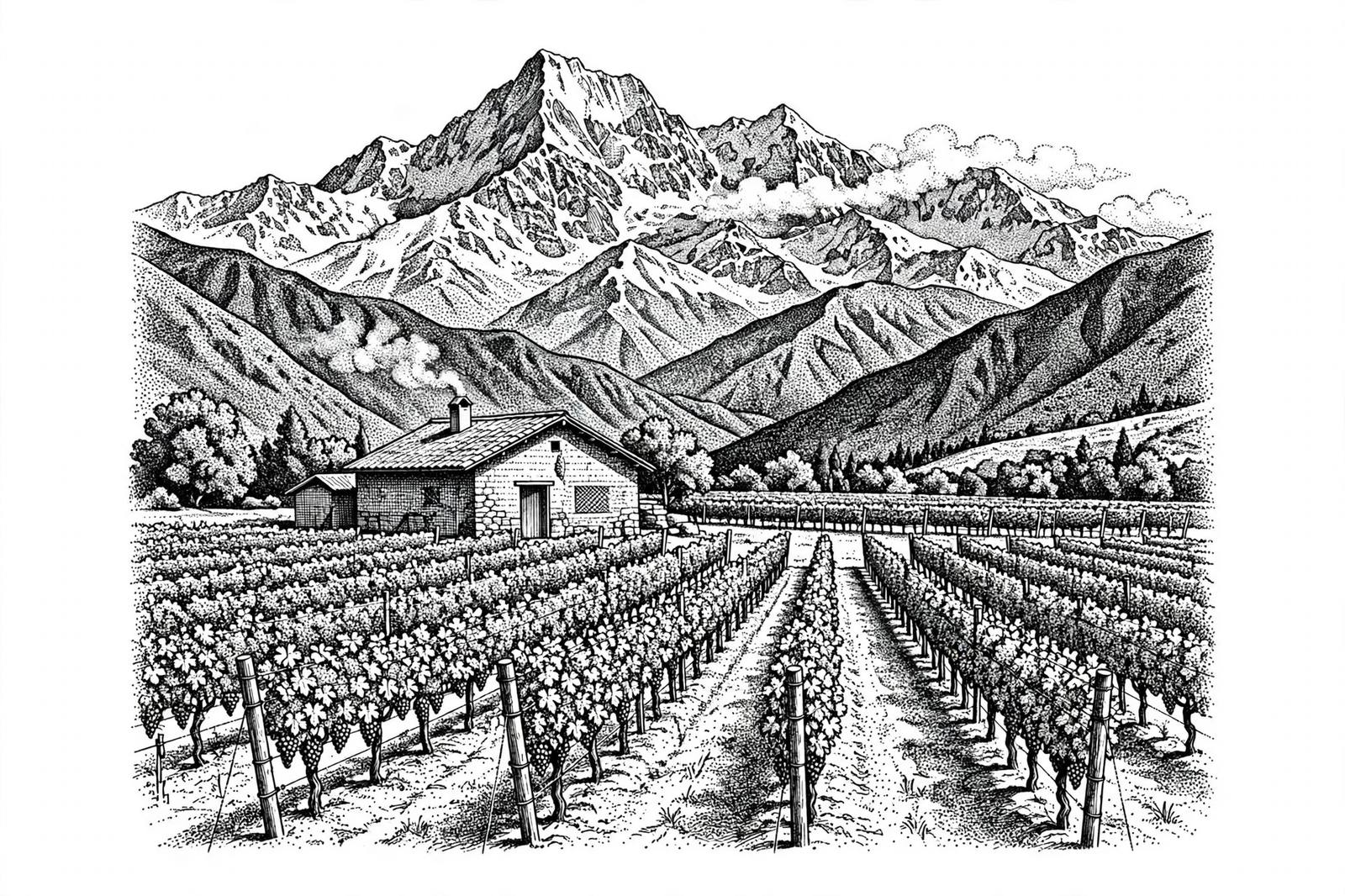
Rather than being defined by extremes, it was a vintage in which balance and each vineyard's ability to express its identity proved decisive.
Chile's 2026 harvest is one "defined by precision, marked by technical consistency and with a clear regional identity across its leading valleys," according to Vina Concha y Toro's 2026 harvest report, as covered by the drinks business. The country's largest wine producer describes a vintage in which each of its key origins, from the coastal north to the deep south, expressed its character with unusual clarity.
The report arrives at a pivotal moment for Chilean wine. While Concha y Toro celebrates a harvest of what it calls exceptional quality across its portfolio, from Super Premium to Icon wines, the wider industry faces what Master of Wine Tim Atkin describes in his 2026 Chile Special Report as considerable challenges: low mass-market prices, oversupply, the decline of the Chinese market, tariffs imposed by President Trump, and the effects of climate change.
Four valleys, four signatures
The company's account of the vintage is organized by origin. The coastal influence shaped Limari, bringing freshness to the wines of the northern valley. Maipo offered structural stability, the trait that has long underpinned the region's Cabernet Sauvignon. In Peumo, in the Cachapoal Valley, precise adjustment of the growing cycle allowed late-ripening varieties to reach full balance. And Maule demonstrated resilience in the face of variable weather.
The detail rewards attention. In Peumo, where the company's Carmenere wines originate, winter rains and an early spring start were checked by rainfall in March that cooled things down at a critical stage. That moderation slowed ripening and allowed what the company called a "gradual and uninterrupted evolution during a crucial period for achieving balance between technological and phenolic maturity," producing wines with intensity, freshness, concentration, and character.
A similar rain event in Maule demanded careful vineyard management and well-timed picking decisions. Merlot in San Clemente was predominantly harvested under ideal conditions before the rains arrived, while in Cauquenes the results were also highly positive, yielding wines with what the company described as excellent fruit expression, softness, and balance.
Precision over extremes
Reflecting on the harvest, Marcelo Papa, technical director of Vina Concha y Toro, said the 2026 vintage "confirms that quality is built upon a precise understanding of each origin." He added: "Rather than being defined by extremes, it was a vintage in which balance and each vineyard's ability to express its identity proved decisive."
The framing is deliberate. In a year when heat and drought defined the European harvest, Chile's leading producer is positioning its 2026 wines around balance and site expression rather than power. The company noted that the harvest was "not defined by a single factor, but by the clarity with which each origin expressed its winemaking potential."
An industry under pressure
The confident vintage report lands against a sobering industry backdrop. Atkin's 2026 Chile Special Report, written with Amanda Barnes MW after a three-week trip covering all of Chile's major regions, argues that Chile is simultaneously facing its toughest commercial environment in years and producing the greatest and most diverse wines in its history. The report covers 1,232 wines from 175 producers, with 992 scoring 90 points or more.
The tension between quality and commerce defines the strategic question for Chilean wine. Oversupply and weak mass-market pricing squeeze producer margins, the Chinese market continues its decline, and US tariffs add cost to a key export destination. Yet the top of the market, the Super Premium and Icon tiers where Concha y Toro concentrates its ambitions, keeps advancing on quality.
What the trade should watch
Concha y Toro's harvest narrative points to where Chilean wine is heading: deeper regional identity, technical precision, and a portfolio weighted toward premium tiers that can carry the country's reputation even as the volume business struggles. For importers, the 2026 vintage offers wines of clarity and balance from a producer with the scale to deliver consistency. For the wider trade, the contrast between the harvest report's confidence and the industry's structural challenges is the story to follow, because Chile's ability to convert world-class winemaking into sustainable economics remains the open question.