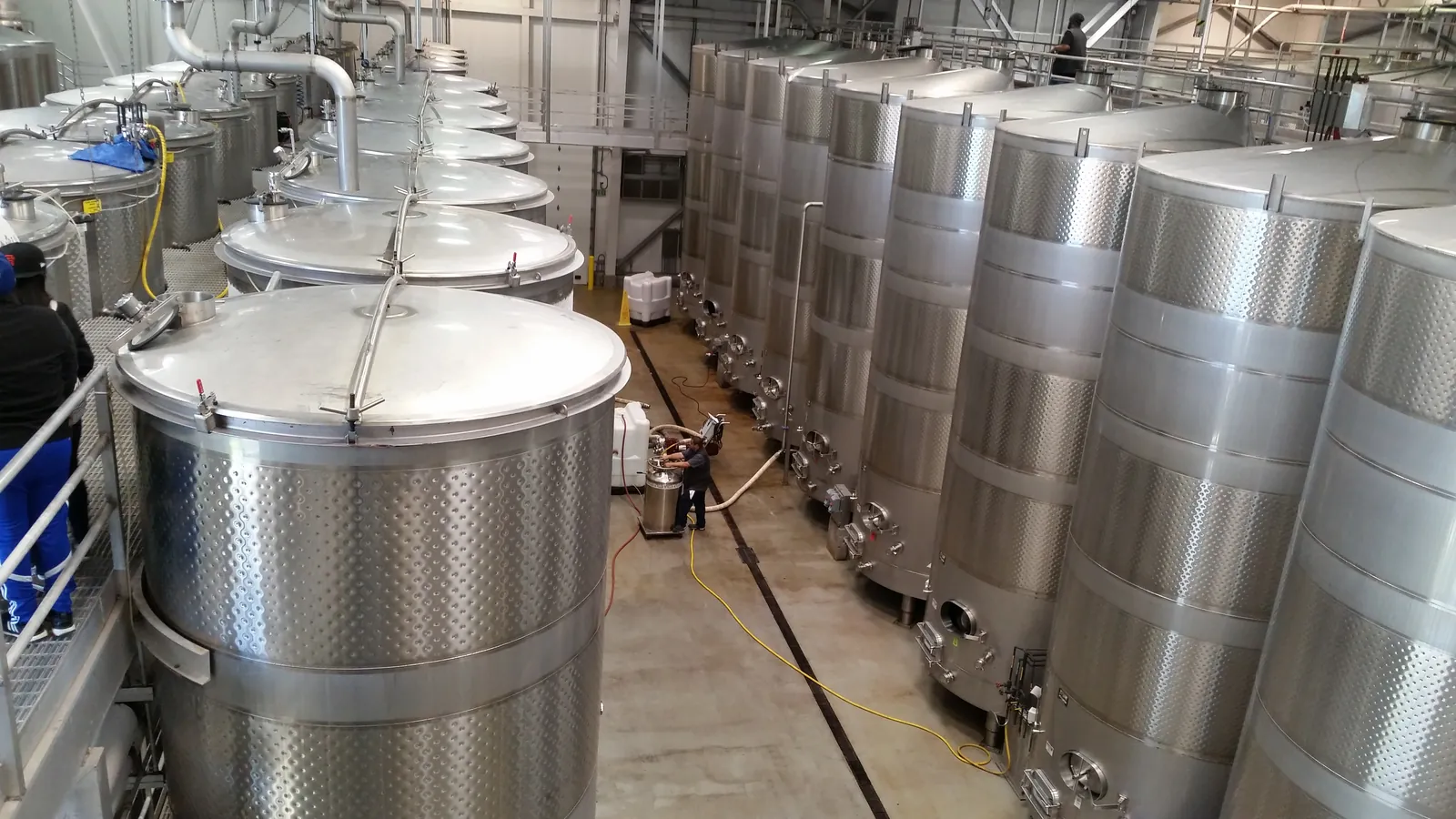
World wine production will stay close to historic lows in 2026, according to the first estimates published by the International Organisation of Vine and Wine on 18 November. The OIV puts global output in a range of 220 to 230 million hectolitres. At the midpoint of 225 million hectolitres, production would be 7 percent below the average of the past five years, roughly in line with 2025 and virtually unchanged from 2024, when output fell to its lowest level since 1961.
The estimate marks a fourth consecutive year of below average production. The OIV based the figures on data provided by 29 countries, which together represent 95 percent of global production. Director general John Barker attributed the weak vintage principally to climate, with heat, drought and frost cutting yields across major producing regions, continuing the pattern of the three previous years.
EU output edges up 1 percent
The European Union still accounts for about three-fifths of world production. The OIV put EU output at 137 million hectolitres, up 1 percent on 2025, while production across Europe as a whole sits 6 percent below the five year average. The southern hemisphere, which harvests in the first half of the year, recorded production 3.1 percent below 2025, according to the OIV's first estimates presentation.
The new range sits against the OIV's own recent baselines. Its State of the World Wine Sector report, published in May 2026, estimated 2025 production at 227 million hectolitres, only slightly above the historically low level of 2024, and put 2025 world wine consumption at 208 million hectolitres.
Low supply, soft demand
For the trade, the significance of the 2026 estimate is less a shortage than a continued rebalancing. A fourth small vintage in a row tightens supply of new wine at the same time as global consumption drifts lower, which supports prices for sound fruit and finished wine in deficit regions while doing little to clear the inventories built up in surplus ones. Producers in regions that harvested closer to normal now hold a relative advantage going into the 2027 selling season: there is simply less new wine competing for the same shelf space.