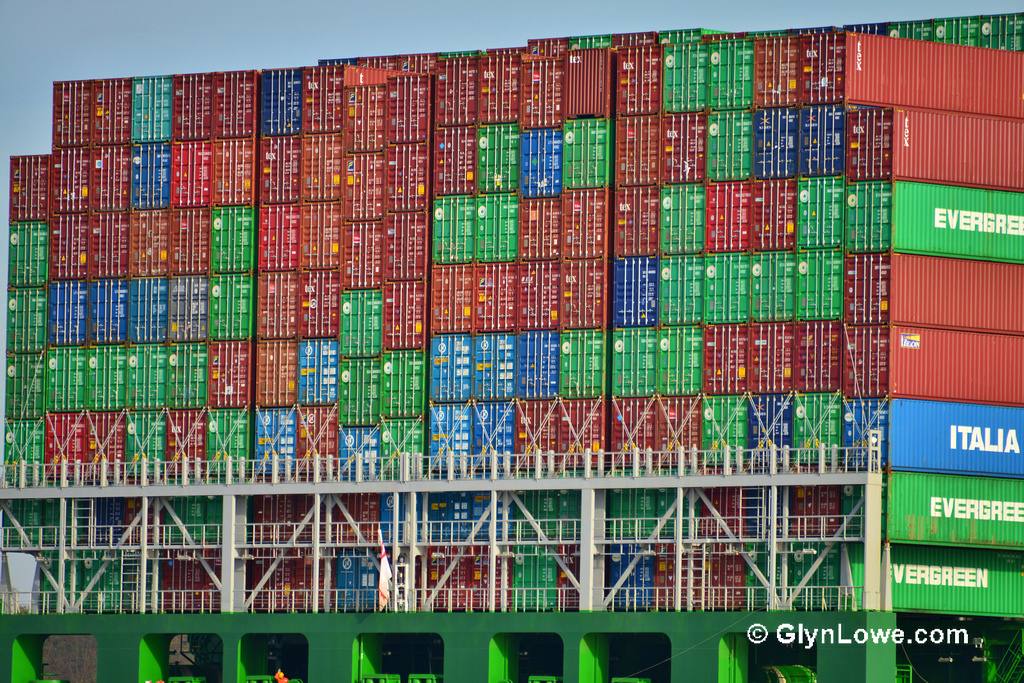
Shanghai to Los Angeles is holding at $7,835 per container, up 26 percent year over year, while Shanghai to New York has reached $10,428, up 20 percent. For wine moving to the U.S. East Coast, higher freight and the 15 percent EU tariff are stacking cost on cost.
Just as wine importers were digesting a 25 percent collapse in U.S. wine import value under the tariff regime, a new cost pressure is rising on the docks. Container freight rates, which spent the summer in free fall, have begun climbing again on the routes that matter to the wine trade, and carriers are reporting rising profits off the back of the rebound.
Drewry's World Container Index currently stands at $4,434 per 40-foot container, up 12 percent over the past year. The Shanghai to Rotterdam benchmark rate sits at $3,399 per FEU, down 2 percent on the week but still up 36 percent from the low point. Shanghai to Genoa, the gateway for Italian wine, is quoted at $3,702, down 3 percent. Asia to Europe spot rates have declined for 12 consecutive weeks, but the base remains far above spring levels.
The trans-Pacific picture is tighter. Shanghai to Los Angeles is holding at $7,835, unchanged on the week but up 26 percent year over year, while Shanghai to New York has ticked up 1 percent to $10,428, up 20 percent from a year ago. For wine moving from Europe to the U.S. East Coast, the combined effect of higher freight and the 15 percent EU tariff is stacking cost on cost.
Carriers are profiting from the turn
The rebound has transformed carrier earnings. Maersk raised its 2026 full-year guidance in September, lifting adjusted EBIT to between $4.5 billion and $6.5 billion from a prior range of negative $1.5 billion to $1 billion. Hapag-Lloyd followed, raising its 2026 outlook to an adjusted EBIT of $100 million to $1.1 billion from negative $1.5 billion to $500 million.
Container News reports that the industry is heading into the peak season without the traditional peak: land-side capacity constraints are biting, and carriers are layering blank sailings onto schedules to defend the rate floor. Traffic through the Suez Canal is rising again as carriers resume Red Sea transits, adding capacity back to the Asia-Europe lane even as demand softens.
What it means for wine
Wine is a heavy, low-margin cargo that feels freight moves acutely. A container of wine from Bordeaux to New York now carries two surcharges that did not exist at anything like current levels two years ago: the tariff on the wine itself and a freight rate that, while down from pandemic peaks, is running materially above 2025 levels on most lanes.
For importers already absorbing duties, the freight rebound narrows the last cushion in the landed-cost equation. For U.S. wineries that import dry goods, bottles and closures, higher trans-Pacific rates compound the tariff pressure on packaging costs. The era of cheap freight that briefly softened the tariff blow appears to be ending just as the inventory overhang clears.
The strategic implication is that landed-cost planning can no longer treat freight as the forgiving variable. With carriers disciplining capacity through blank sailings and earnings recovering, importers should lock rates where they can and assume the floor keeps rising through the holiday season.