The land is where everything begins for us. Protecting it means continually looking for ways to improve every part of our process, including the way we package and deliver our wines.
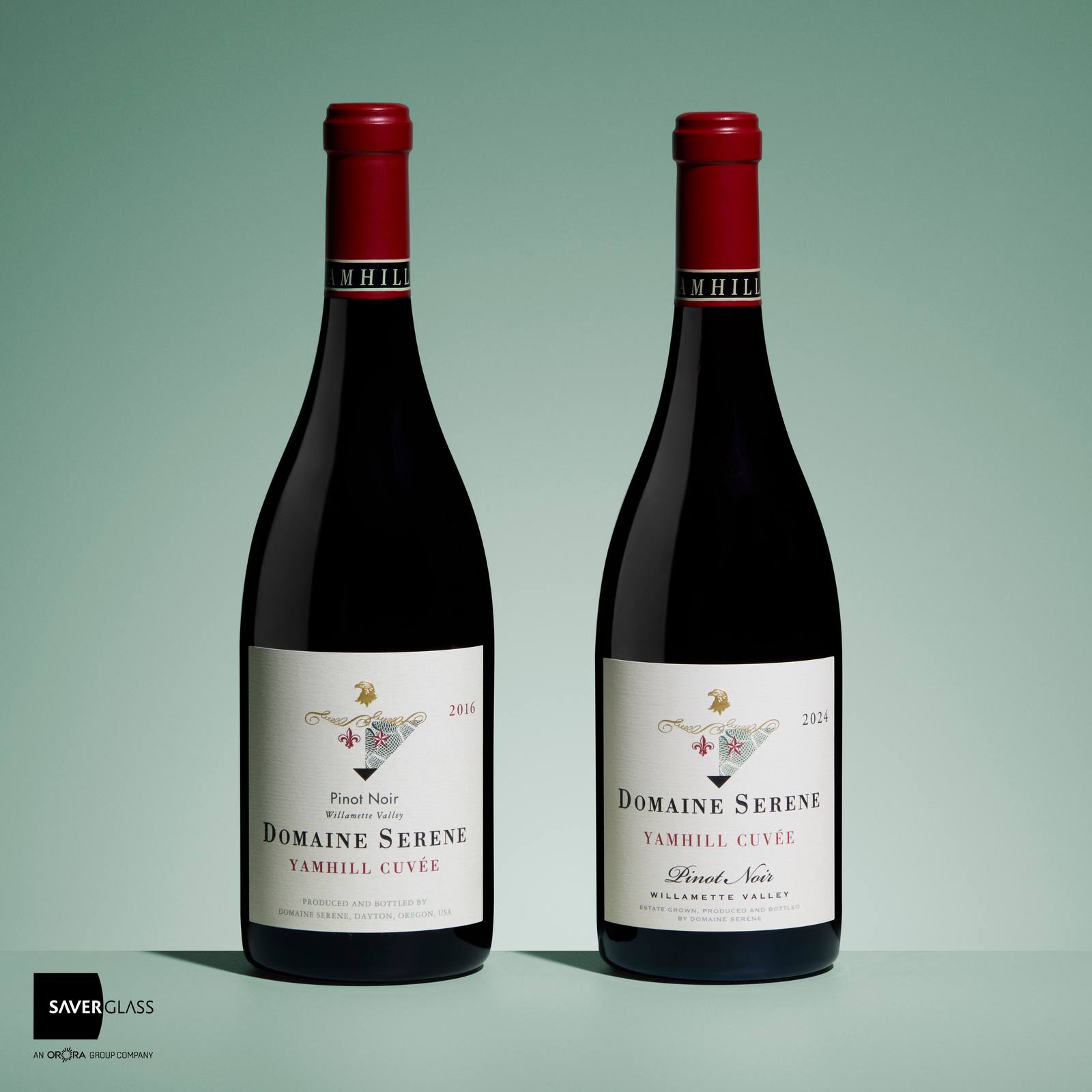
Domaine Serene and Saverglass have launched the Cépage Eco, a lightweight version of the winery's signature bottle shape that cuts weight by more than 200 grams, a 30 percent reduction, while preserving the silhouette that has defined the brand for 35 years. The project, announced September 18, 2026, from Dayton, Oregon and Fairfield, California, will unify packaging across Domaine Serene's estate wines in Oregon and Burgundy, the first single global package in the winery's history.
The numbers, as reported by the companies
According to the companies' announcement, the lighter bottle avoids approximately 15 metric tons of CO2 emissions annually and reduces the glass transported by roughly 250,000 pounds per year, through a combination of lower energy demand in glass production and lower fuel use in transport. These are company estimates; the release does not cite independent audit or third-party verification of the figures, and readers should treat them accordingly.
The Cépage Eco was designed to preserve the distinctive identity of the Cépage bottle shape, which Domaine Serene has used for more than three decades. "The shape of the bottle has been the same for 35 years," said Michael Fay, VP of Winemaking & Viticulture at Evenstad Estates. "It represents our history and our brand. We needed a partner who understood that reducing weight could not come at the expense of what makes the bottle special."
For wineries, bottle weight is one of the largest controllable variables in packaging carbon footprint: glass manufacturing is energy-intensive, and every gram saved compounds across production, transport and distribution. The companies note that lightweighting also reduces labor strain in cellars and warehouse operations, a practical benefit beyond the emissions math.
Why a luxury house is doing this
Domaine Serene was founded in 1989 by Grace and Ken Evenstad and sits within Evenstad Estates. Its positioning is luxury, which has historically meant heavier bottles, not lighter ones, a tension the companies addressed directly.
"The land is where everything begins for us," said Chris Ramsey, Director of Wine Operations & Development at Domaine Serene. "Protecting it means continually looking for ways to improve every part of our process, including the way we package and deliver our wines."
"Sustainability requires balancing environmental progress with the quality, performance, and identity our customers have built their brands on," said Matt Wilson, Senior Vice President Americas at Saverglass, which operates seven manufacturing sites and four decoration plants and has been part of the Orora Group since December 2023. "This project demonstrates what is possible when technical expertise and shared vision come together."
"The depth of relationship and the depth of partnership we have with Saverglass allowed us to tackle that challenge and come out with an outcome that made Grace ecstatic," said Rusty Field, CEO & President of Evenstad Estates.
The packaging industry's bigger picture
Lightweighting is now the glass industry's most active frontier in wine packaging. Glass accounts for a large share of a bottle's total carbon footprint, and with logistics emissions under increasing scrutiny from buyers and regulators, a 30 percent weight reduction that preserves brand identity is a meaningful template. Domaine Serene's move is notable because it applies the approach to an ultra-premium portfolio rather than to value tiers where lightweighting has traditionally concentrated. If luxury houses can go lighter without losing shelf presence, the barrier for the rest of the industry drops considerably.
"Making a lighter bottle and reducing our carbon footprint fits perfectly into what we wanted to accomplish," said Liz Lease-McCaffrey, Chief Revenue & Marketing Officer at Domaine Serene. "If we want to make iconic Pinot Noir and Chardonnay for generations, we have to take care of our land and think about the environment." The Cépage Eco is presented in a film and supporting materials on the Saverglass website.