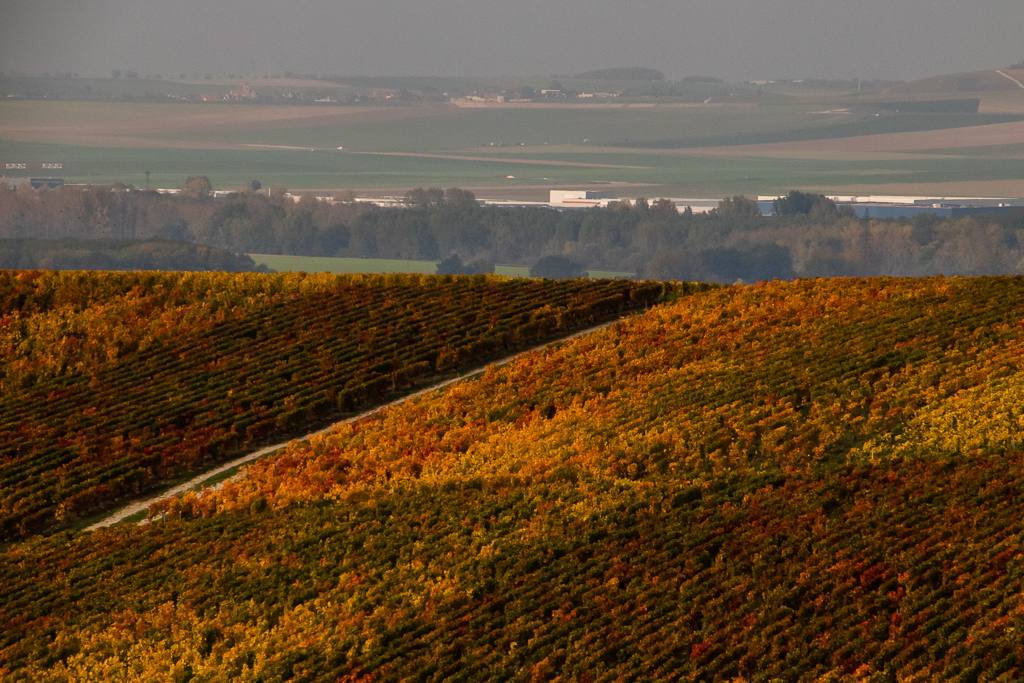
Champagne output is expected to fall 49 percent from 2025 and sit 47 percent below the five-year average.
France is likely to produce one of the lowest wine outputs in the last three decades after severe heat and drought damaged vineyards across the country. The farm ministry's first estimate for 2026 puts national production at 33.9 million hectolitres, equivalent to about 4.5 billion standard bottles, down 6 percent from 2025 and 17 percent below the 2021 to 2025 average, Reuters reported on September 7. It would mark France's third consecutive weak harvest, after low output in 2024 and 2025.
The headline figure masks a sharply uneven regional picture. Champagne faces a near halving of its crop, Burgundy-Beaujolais is down by a third, and the country's largest producing basin is one of the few regions moving in the opposite direction. For buyers, importers, and investors, the 2026 vintage is already a story of scarcity at the top end and a bifurcated market underneath.
Champagne halved
Champagne suffered the steepest losses of any major region. Output is expected to fall 49 percent from 2025 and sit 47 percent below the five-year average, after the country's hottest summer on record brought prolonged heat spikes and drought stress during the critical ripening period. The ministry said early-season conditions had been favourable, but summer drought and heatwaves damaged vines, caused sunburn and berry shriveling, and reduced yields.
The commercial implications are immediate. Champagne houses and growers will be allocating a much smaller pool of wine across their ranges, and pressure on grape prices, already among the highest in the world, is likely to intensify. For the trade, the 2026 shortfall reinforces the case for securing allocations early and for watching how houses balance volume against the imperative to protect brand equity in their flagship blends.
Burgundy's earliest harvest in nearly five centuries
Burgundy-Beaujolais is forecast to produce a third less wine than in 2025, with Pinot Noir output in the region estimated down by half, compounded by hail damage earlier in the year. Growers began picking on August 13, reportedly the earliest start to the harvest since 1556, as relentless heat accelerated ripening to a pace not seen in almost 470 years of records. Like elsewhere in France, most producers started harvesting unusually early this year as a result of the extreme heat.
The combination of sharply lower yields and an exceptionally early harvest puts Burgundy in difficult territory. The region's wines already command some of the highest prices in the world on the back of tiny production and intense global demand; a one-third drop in volume will only sharpen competition for allocations of village, premier cru, and grand cru wines. Merchants with established grower relationships will be best positioned, while newer buyers may find doors closing.
Bordeaux and the south diverge
Bordeaux stands apart from the national gloom. The region is expected to rebound 10 percent from 2025 after late-August rain helped offset drought stress, though production remains well below its five-year average. Languedoc-Roussillon, France's largest producing basin, should rise 5 percent from last year's weak harvest thanks to better yields, though output there also remains below average. The Loire Valley is forecast down 12 percent and Charentes down 6 percent.
The contrast matters for the broader market. Bordeaux's large production base and deep distribution networks mean the region can partially offset shortfalls elsewhere in the French portfolio, particularly at the commercial premium tier where volume matters. For negociants and importers, Bordeaux's relative abundance in 2026 offers a hedge against the scarcity pricing likely to grip Champagne and Burgundy.
What the trade should watch
The damage extends beyond the vineyard. The national vineyard area fell 2.5 percent this year, as oversupply amid falling consumption has prompted winemakers to uproot a portion of their vineyards in recent years. On September 4, agriculture minister Annie Genevard announced an emergency support plan worth more than 1 billion euros for farmers hit by the summer's record heat, including compensation for losses and property tax relief. Beyond wine, most French agricultural producers were badly hit by heatwaves that devastated crops, pastures, and water supplies.
A 17 percent shortfall against the five-year average is not a statistical curiosity; it is a supply shock concentrated in France's most prestigious regions, arriving as a third straight weak vintage. Expect upward pressure on ex-cellar prices for Champagne and Burgundy, tougher allocation negotiations, and renewed attention to the regions that escaped the worst of the weather. The 2026 vintage will reward buyers who move early, diversify across regions, and treat scarcity as the defining feature of the French market this year.