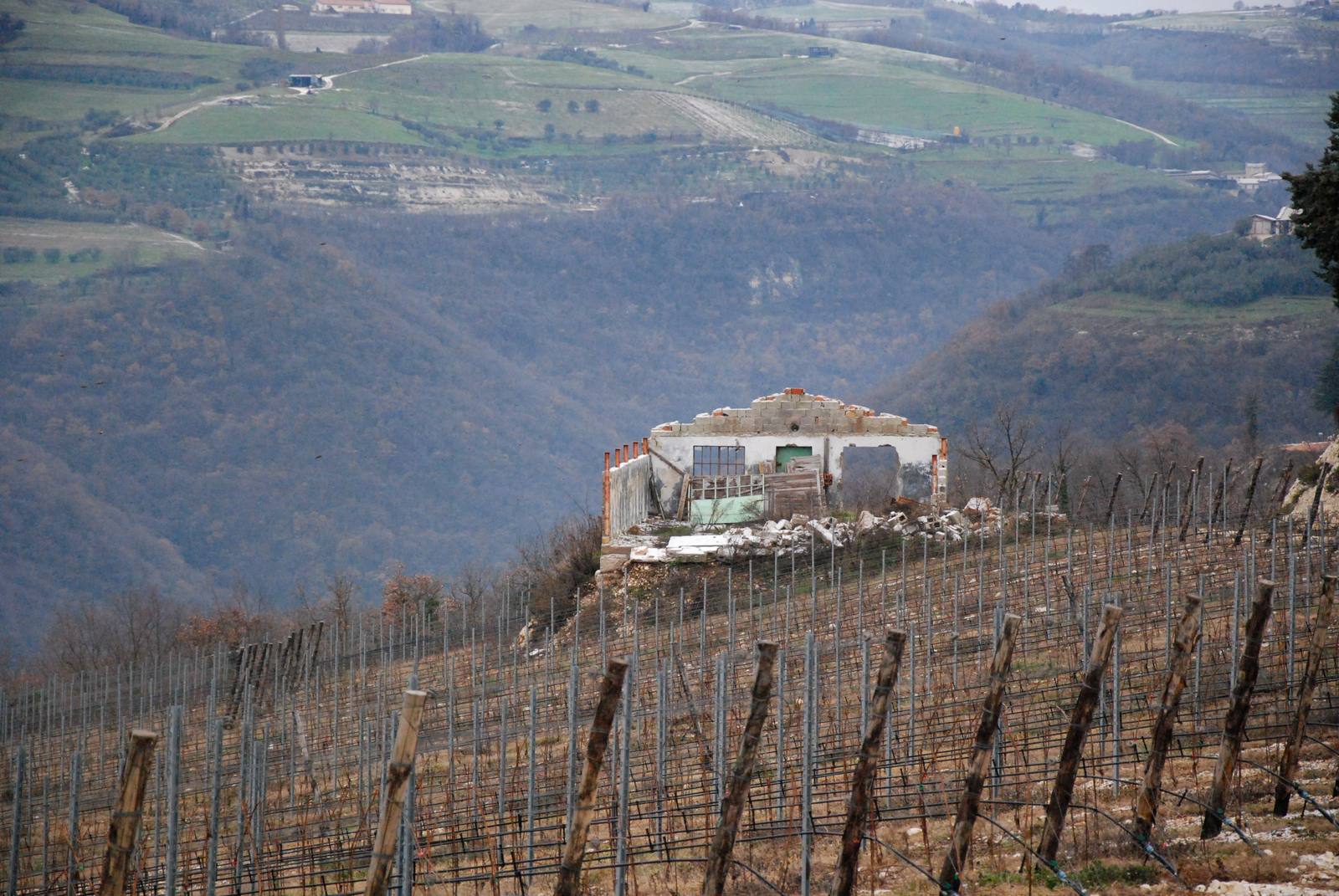
Around 49.1 million hectoliters of wine sat in Italian cellars as of May 31, 2026, more than an average annual yield.
Italy entered the 2026 harvest with its cellars full and its consortia determined to keep them from overflowing. The figures come from the Italian Ministry of Agriculture, via wein.plus. Around 49.1 million hectoliters of wine sat in Italian cellars as of May 31, 2026, more than an average annual yield. With international demand slowing and bulk prices under pressure, appellations across the country moved to limit harvest quantities and align supply with demand.
The yield-cutting wave is broad. The Toscana IGT consortium applied for a 20 percent reduction in permissible yields: 13,600 kg per hectare for whites instead of 17,000, and 12,000 kg for reds instead of 16,000. Brunello di Montalcino trimmed its cap to 7,000 kg per hectare from 8,000, while the Chianti consortium again requested a 20 percent reduction and Chianti Classico is aiming for 6,500 kg per hectare instead of 7,500. Vino Nobile di Montepulciano and Bolgheri, notably, are planning no reductions.
The Veneto is going further. The Valpolicella consortium had already decided on a reduction from 12,000 to 10,000 kg per hectare for 2025 through 2027, with part of the quantity callable if needed. For Pinot Grigio delle Venezie, Italy's largest white wine appellation, a ceiling of 16,000 kg per hectare applies for 2026, including 3,000 kg that may only enter the market with the consortium's approval. The Soave consortium goes furthest: for the next three vintages, the usable DOC area per operation will effectively be halved, alongside yield cuts to 13,000 kg per hectare for Soave and 12,000 for Soave Classico.
Valpolicella parks 20 percent of the crop
Valpolicella's 2026 harvest began roughly two weeks ahead of the historical average, with high quality expectations, Winecouture reported. Total production is estimated at just over 861,000 quintals of grapes, broadly in line with 2025. The defining move is a storage measure: 172,280 quintals, about 20 percent of total production, will be temporarily removed from the market to protect the economic balance of the supply chain, effectively reducing the available yield from 100 to 80 quintals per hectare.
Quality reports are encouraging. Donatella Cinelli Colombini reported that her Montalcino harvest concluded on September 28, the earliest on record, with picture-perfect Sangiovese clusters, small healthy berries and remarkably uniform ripening. In the Langhe, early-ripening varieties were harvested weeks ahead of schedule to preserve the acidity behind the wines' freshness.
What buyers should expect
Italy's playbook is deliberate supply discipline: keep prices defensible now that consumption growth has stalled. The combination of yield cuts, callable volumes and outright storage means the 2026 vintage will arrive in tighter supply than the cellar stocks suggest, and the best-positioned denominations, from Brunello to Valpolicella to Soave, are signaling they would rather sell less at a fair price than more at a discount. For importers negotiating 2026 allocations, the message is to plan early: the Italian market is managing scarcity on purpose.