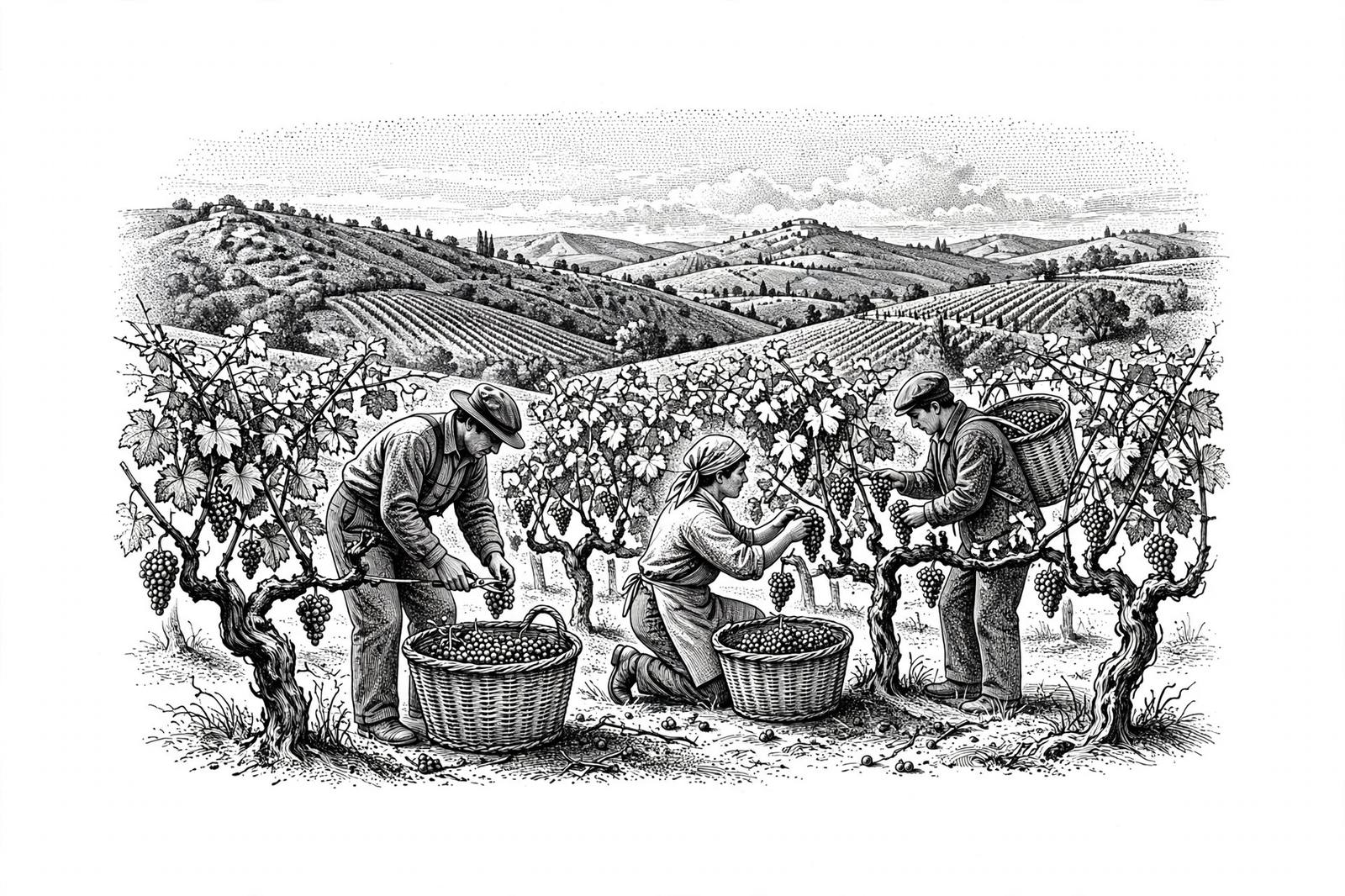
The grape harvest in Rioja officially began on Thursday, August 6, earlier than ever before in the region.
Rioja has begun its 2026 grape harvest earlier than ever before in the region's recorded history. Picking officially started on Thursday, August 6, as extreme summer heat accelerated ripening across the Denominacion de Origen Calificada, with Rioja Oriental reporting the earliest start in its history on the same day, according to wein.plus.
The record-early harvest coincides with the most significant regulatory overhaul Rioja has undertaken in years. For the 2026 vintage, the region introduces a new "Vendimia temprana" ("Early Harvest") category aimed squarely at the growing market for lower-alcohol wines, alongside newly approved partial de-alcoholization rules that give producers unprecedented flexibility on alcohol levels.
A new category for lower alcohol
From the 2026 vintage, Rioja producers may label wines as "Vendimia temprana" for the first time. The designation applies to red wines containing less than 12 percent alcohol by volume, as well as white and rose wines with less than 11 percent, the newspaper La Rioja reported via wein.plus. At the same time, the authorities have lowered the minimum alcohol content for classic Rioja: starting in 2026, the floor is 9 percent for white and rose wines and 10.5 percent for reds, down from 11.5 percent previously. Wines carrying aging designations such as Crianza, Reserva, or Gran Reserva are not affected.
The changes had already been decided by the regional growers' association last year, but an objection from the Basque regional government delayed implementation until this year. The delay underscores how contested the move was: lowering alcohol thresholds touches the identity of a region built on structured, age-worthy reds.
De-alcoholization, within limits
Partial de-alcoholization of wines has also been newly approved. Producers may remove up to 20 percent of the alcohol from their wines without any indication on the label; a wine at 13 percent alcohol by volume, for example, can be reduced to 11.6 percent. The alcohol content must not fall below the prescribed minimums, and the Consejo Regulador must be informed in writing in advance. In markets with alcohol duties such as the United Kingdom, these wines may be offered at a lower price. Fully de-alcoholized wines, however, may still not be labeled as DOCa Rioja.
The commercial logic is clear. As consumers moderate their drinking and duty regimes penalize higher alcohol, the ability to trim a fifth of a wine's alcohol without label disclosure gives Rioja producers a quiet tool to stay competitive on price and positioning. For importers in duty-sensitive markets, the 2026 rulebook could translate into keener shelf pricing.
La Rioja Alta's earliest harvest in 136 years
The regulatory reset is unfolding against a harvest defined by heat. La Rioja Alta announced on September 23 its earliest harvest across both Rioja and Ribera del Duero in the company's 136-year history, according to winecap's northern hemisphere harvest coverage. Spanish trade bodies have set lower yield caps to restrict supply, and combined with improved vineyard management, quality has held up well despite record temperatures and wildfires this season.
In Rioja Alavesa, the Basque sub-zone marked the earliest vintage in the 100-year history of the DOC, running two to three weeks ahead of the 25-year average. Some 40 million kilograms of grapes had been collected, with grape health described as excellent thanks to low fungal disease pressure, though the heat pushed alcohol levels higher.
What the trade should watch
Rioja is sending two signals at once. The record-early harvest confirms that climate pressure is now a structural feature of the region's vintages, not an anomaly. The regulatory response, a lower-alcohol category and sanctioned de-alcoholization, shows a historic region choosing adaptation over nostalgia. For buyers, the 2026 vintage will be the first to test whether "Vendimia temprana" can carve out a commercial identity, and whether Rioja's pivot to moderation strengthens its hand in the markets where the next decade of growth will be decided.