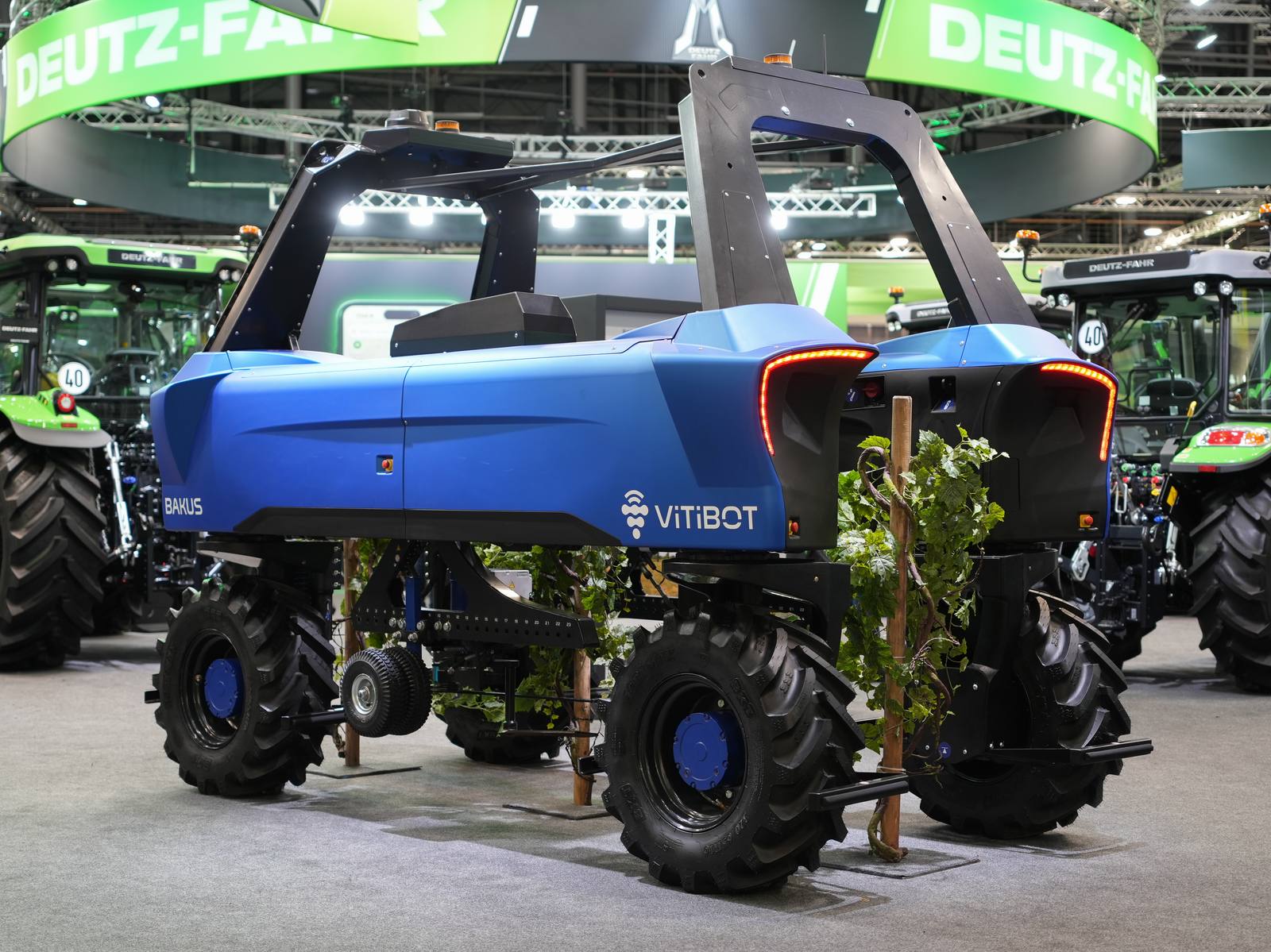
"They are using it for cultivation under-vine, a time-consuming task that needs a degree of precision."
Wine writer Jamie Goode has published video of a VitiBot Bakus autonomous vineyard robot working in the Grand Cru Corton-Charlemagne vineyards of Domaine Louis Latour, one of the most prestigious addresses in Burgundy. Writing on wineanorak.com on April 12, 2026, Goode said he had known about the Bakus for a few years but was seeing it in action for the first time, in Louis Latour's own vineyards, where the domaine is using it for under-vine cultivation.
"It was in the Grand Cru Corton-Charlemagne vineyards of Domaine Louis Latour, and they are very happy with the way it works," Goode wrote. "They are using it for cultivation under-vine, a time-consuming task that needs a degree of precision. The design of the Bakus means it can turn around in narrow headlands very effectively." The film shows the straddle-configured electric robot working between the vine rows with its tools under the canopy.
A maturing company behind the machine
The Bakus comes from VitiBot, the Reims-based French developer of vineyard robots, in which European equipment group SAME Deutz-Fahr (SDF) took a majority stake in July 2022, pairing startup robotics with one of the world's major tractor manufacturers. The Bakus is a 100 percent electric, autonomous straddle tractor built for under-vine work, and a Louis Latour Grand Cru is about as demanding a proving ground as vineyard machinery gets.
Why Grand Cru matters
Louis Latour's endorsement is commercially significant. A Grand Cru producer whose Corton-Charlemagne sells into the top tier of white Burgundy does not experiment with vineyard machinery casually: under-vine cultivation in a Grand Cru block demands precision, because any damage to the vines or inconsistency in the work shows up in the wine. That a Bakus is trusted with that work in Corton-Charlemagne is the strongest field validation a vineyard robot can get.
The broader read is that vineyard robotics has entered its consolidation phase. VitiBot is no longer a pure startup; it is a majority-owned subsidiary of a major equipment group, selling into the most quality-sensitive vineyards in France. For growers evaluating autonomous under-vine work, the question is shifting from whether the machines work to which platform, and which service network, to commit to.